

Understanding how you run to run better
When it comes to running technique, the first image that often comes to mind is that of the foot hitting the ground. The way we land, however, is just the tip of the iceberg: behind it lie years of motor habits, our morphology, the shoes we wear, and even the way we walk in everyday life.
Yet, observing your foot strike is one of the simplest and most immediate ways to understand how to improve your running. It's the gesture we repeat thousands of times in every workout and, if optimized, can help us not only run faster but also significantly reduce the risk of injury.
In this article, we take an in-depth look at the different foot strikes in running—heel strike, midfoot strike, and forefoot strike—and how they affect overall body posture.

Not all metrics are equally reliable

Why is foot strike so important in running?
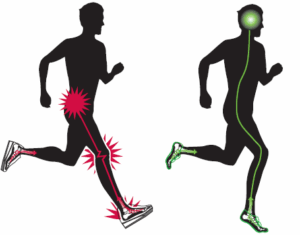
Every time our foot hits the ground, we experience an impact force equal to 2-3 times our body weight.
If the support is not well distributed or occurs in an incorrect body position, this force is discharged on the joints and tendons in a suboptimal way.
Let's think about a simple example: if you land very far from your body with your heel, your leg acts as a "brake," interrupting your natural forward motion. This causes a sharp impact that travels up the shin, knee, and hip.
Conversely, when the support occurs closer to the center of gravity, the impact is gradual and the subsequent push becomes more fluid.
This is why experts are increasingly talking about running economy : it's not just about going faster, but about saving energy and running with less mechanical stress.
The three great ways of placing your foot
1. Heel strike: natural but not always efficient
The heel strike is the most popular way of running, especially among beginners.
It's natural because it imitates the walking motion: first we land on our heel, then the rest of our foot.
But when you run, the dynamics change: the stride becomes longer, the speed increases and the impact on the heel becomes much more violent.
Heel strike often causes the foot to land in front of the body. This position creates a real "braking effect": each step slows the pace slightly, requiring more energy to restart.
Many overuse injuries common in runners—knee pain, patellofemoral syndrome, shin splints, and sometimes plantar fasciitis—are associated with prolonged, heavy heel strikes.
It must be said, however, that it is not to be demonized: for some runners, especially those who run at a slow and regular pace, it can be a natural and sustainable support, especially with shoes with good cushioning.
2. Midfoot support: the ideal compromise
Midfoot strike is often considered the most balanced solution.
It is a soft gesture, in which the foot lands with the central part, almost as if it were "caressing" the ground.
One of the great advantages of this type of support is that it occurs closer to the body's center of gravity. This means that forces are distributed better and the notorious braking effect typical of heel striking is avoided.
Runners who run midfoot often describe a feeling of greater fluidity: the foot lands, stabilizes, and restarts in a single, more harmonious motion.
From a biomechanical point of view, the midfoot also helps protect the joints: the load is distributed along the entire leg, reducing peak stress on the knee and hip.
It is no coincidence that many technique improvement programs — including those for marathon runners — aim to encourage this type of support.
The only thing to keep in mind is that, if you've had years of heavy heel strike, adapting to the midfoot takes time. Light ankle mobility and foot strength exercises can speed up the process.
3. Forefoot strike: responsive and powerful, but demanding
Forefoot strike is typical of very fast runners, children, or athletes with very advanced technique.
Landing on the ball of your foot allows for an immediate, springy push-off, almost as if your foot were a spring. It's the perfect landing for sprints, sprints, and high-tempo runs.
The big limitation, however, is the high load on the calves and Achilles tendon.
Those who don't have very well-trained muscles are easily at risk of inflammation or overload, especially over long distances.
For this reason, forefoot walking is not always recommended as a “basic” style: it can be useful in some training phases, but it is not necessarily the most sustainable for everyone.
Posture and support: two inseparable elements
Talking about foot support without mentioning posture would be incomplete: the way you touch the ground depends directly on how you position your body.
Running with your torso upright but slightly leaning forward, from the ankles and not from the back, allows your foot to land just below your center of gravity.
This simple inclination — which is often almost imperceptible — naturally facilitates midfoot support.
Likewise, arms and shoulders significantly influence running: stiff arms and incorrect swings can shift the torso and alter the support.
The pelvis is another crucial point: a backward pelvis—often due to long hours of sitting—causes the foot to land in front of the body, making the heel strike easier and increasing the impact with each step.
The basic concept is simple: an aligned body promotes a more natural and less traumatic support .
How to improve your footing (without turning everything upside down)
Many runners try to change their strike too drastically, going from heel strike to forefoot strike in just a few weeks.
This is the best way to get injured.
The key is to be gradual: improve your posture, slightly increase your cadence, and include some technical running exercises.
A progressive increase in cadence , for example, spontaneously causes the foot to position itself further below the center of gravity. You don't have to think about it: the body does it on its own.
Technical gaits such as skipping, kicking, bounding, and midfoot walking help build sensitivity and strength in the feet.
Finally, slow running—often underestimated—is a perfect laboratory for working on technique without excessive stress.
Conclusion: Find your own style, don't copy one.
There is no “perfect” support that works for everyone.
There is one that best suits your body, your strength level, and your goals.
For many runners, midfoot strike represents an excellent balance between efficiency, fluidity, and injury prevention, but the transition must be gradual and conscious.
Observing how you run, improving your posture, and listening to your body remain the keys to running better, longer, and with less risk.


The article Foot support and posture in running comes from ilRunner.com .