

Introduction — Why AI is important for runners
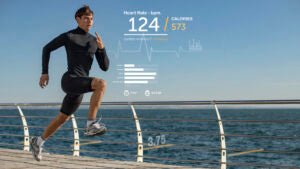
In recent years, artificial intelligence (AI) has gone from an abstract concept to a tangible tool in runners' shoes, wrists, and smartphones.
It's not just about "extra numbers" in apps: AI is improving technique analysis, personalizing workouts, aiding injury prevention, and offering real-time coaching that until recently was reserved for elite athletes.

Not all metrics are equally reliable

1) Where we find AI: the devices that integrate it
Smartwatches and sports watches
Major sports watch manufacturers (Garmin, Coros, Polar, Suunto, and others) are integrating ML/AI-based features to analyze training load, recovery, heart rate variability, estimated running economy, and dynamic workout suggestions. Many connected (or built-in) apps use models to suggest daily intensity and volume based on the athlete's history.
AI-powered sports glasses and headsets
Sports-specific products are emerging—for example, smart glasses that integrate AI assistants, cameras, and integration with platforms like Garmin/Strava: useful for real-time feedback and automatically creating post-workout highlights or analysis.
Smart insoles and insoles
Prototypes and the first commercial devices (smart insoles) use pressure sensor arrays and machine learning algorithms to map plantar pressure, estimate impact forces, and recognize running patterns; this enables more "shoe-level" diagnosis than motion analysis laboratories. In recent studies, the combination of high-resolution sensors and neural networks allows for laboratory-level estimates of ground forces, paving the way for personalized technical advice.
Cameras and markerless motion capture via smartphone
AI systems capable of reconstructing movement from video (a single camera) are becoming reliable for measuring many running parameters (cadence, stance phase, symmetry). This brings gait analysis closer to anyone with a smartphone.
2) What does AI actually do to improve running?
Personalized training (AI-coaching)
Apps and services that leverage AI create dynamic, adaptive plans: if you're slower, tired, or short on time, the algorithm recalibrates the weekly plan. Some platforms offer conversational responses (chatbot coaches) that explain why a workout has been adjusted. This brings the level of personalization of a human coach closer to a much larger scale.
Technical analysis and injury prevention
AI can recognize risk patterns—such as sudden increases in external load, changes in stride timing, or abnormal plantar pressure distributions—and recommend practical recommendations to reduce risk (extended recovery days, targeted strength sessions, and pacing changes). Recent studies and reviews show how machine learning and explainable AI (XAI) techniques are improving the interpretability of biomechanical recommendations.
Real-time feedback
Some devices/solutions offer "live" feedback: correct your cadence, maintain your posture, slow down to recover. AI manages latency and noise to provide useful feedback without distracting you. This is especially useful for those working on technique or rehabilitation.
Advanced post-run analysis
In addition to the usual pace and distance graphs, today you can obtain: running economy estimates, evaluation of push-off efficiency, plantar pressure mapping, and "probable causes" of poor performance (e.g., poor recovery, changes in pace). These insights are often accompanied by practical suggestions that can be applied the following day.
3) Practical examples and use cases
-
The amateur runner who doesn't have a coach : uses an AI app to get a 16-week plan tailored to their goal (5K/10K/half). The app adjusts the loads week by week.
-
The physical therapist : obtains data from a smart insole or markerless video to explain to the patient where to correct technique; AI highlights the most important metrics, facilitating targeted interventions.
-
The competitive athlete : integrates power data, GPS and sensors to use an AI system that suggests when to push (tapering, threshold) and how to balance running/recovery.
4) Limits, risks and ethical aspects
Accuracy and validation
Not all metrics are equally reliable: some estimates (internal forces, precise economic assessments) still require laboratory comparisons. Many studies from 2024–2025 emphasize the need for validation standards and uniform protocols before blindly trusting recommendations.
Many neural networks are "black boxes." Explainable AI is becoming crucial: runners and professionals want to know why an algorithm suggests a change, not just get the recommendation. Recent reviews show progress, but also the need for more clinical studies.
Privacy and sensitive data
Biometric data, videos, and personal health parameters are sensitive. It's essential to choose apps and devices that explicitly disclose how they process data (local vs. cloud storage, anonymization, sharing with third parties). Some services collect data to improve models: check their terms and privacy policies before sharing too much data. (See also the manufacturers' and apps' policies.)
Technology over-reliance
AI is an aid, not an absolute truth: human interpretation remains necessary, especially for painful symptoms or signs of injury. Don't replace medical advice with an automated recommendation.
5) How to use AI in practice — a step-by-step guide for runners
-
Define your goal (e.g., finish a 10K, improve your threshold, run without pain).
-
Choose the right devices : a reliable sports watch + possibly a smart insole or video analysis app. You don't need everything: start with what you use regularly.
-
Check validation : prefer devices/apps with scientific publications or validation studies.
-
Set privacy : Read the data sharing settings and choose the level of privacy you prefer.
-
Use feedback : Apply the advice for 2–4 weeks and measure the results (performance, sensation, pain). If something doesn't feel right, seek professional help.
-
Combine data and common sense : AI suggests; you judge—listen to your body.
6) Tools and apps to watch (2024–2025 examples)
-
AI Apps/Coaches : New startups and established apps are launching conversational coaches and adaptive plans. Some examples touted in 2025 include platforms integrating celebrity coaches and AI for personalized workouts.
-
Devices : Sports watches with AI features and coach integration; smart insoles in commercial or prototype stages; smart sports glasses with integrated assistants.
Conclusion – the near future
AI is making running more accessible, scientific, and personalized. Over the next two to five years, we'll see a convergence: increasingly smaller and more reliable sensors (insoles, sock sensors), explainable algorithms that support clinical decisions, and personalized coaching available to everyone.
But the key word remains balance : using AI as a tool, not as a substitute for human judgment.


The article How Artificial Intelligence is Changing Running comes from ilRunner.com .